Current Price: USD $25,000 – Source
Auction Ends: Tuesday, October 13 at 10:05am PT
–
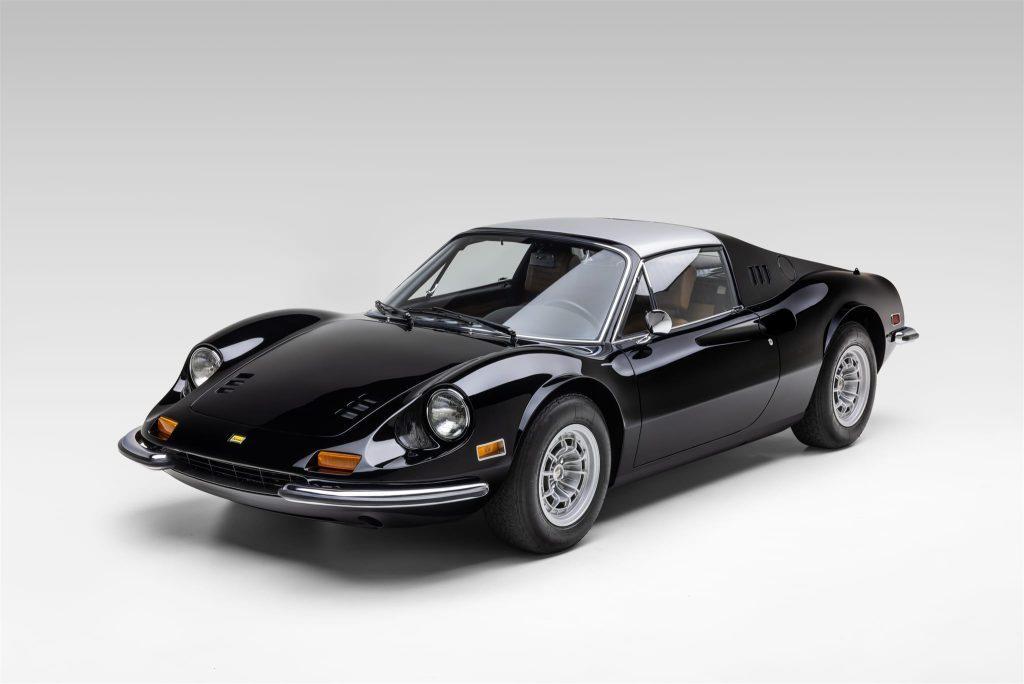
This 1973 Ferrari Dino 246 GTS is one of approximately 91 US-market spyders built with “chairs and flares” and is one of just three examples of the 246 GTS delivered with a targa panel painted in Argento (silver). Chassis 06464 was completed on December 20, 1973, with optional equipment including Campagnolo 14×7.5” wheels, flared fenders, Daytona-style seats, Borletti air conditioning, and power windows. The car was delivered new to Bill Harrah’s Modern Classic Motors in Reno, Nevada, before being sold to its first owner in California. After spending time under the long-term stewardship of its second owner on the West Coast, the car was purchased in 2012 by a New Jersey owner who commissioned a refurbishment that included a repaint in the factory shade of black. It was later purchased by its current owner in 2025 and subsequently underwent work including a re-trim of the interior in the factory-specified Tobacco and black leather and a repaint of the roof in its original Argento shade. Power is provided by a 2.4-liter quad-cam V6 topped with triple Weber carburetors, and additional equipment includes a five-speed manual transaxle, servo-assisted disc brakes, MSD electronic igntion, and a Blaupunkt push-button radio. This 246 GTS is now offered by the seller on behalf of its current owner in California with Matthias Bartz and Marcel Massini reports, handwritten maintenance notes dating back to 1974, invoices from 2022 to present, spare parts, and a Montana title.
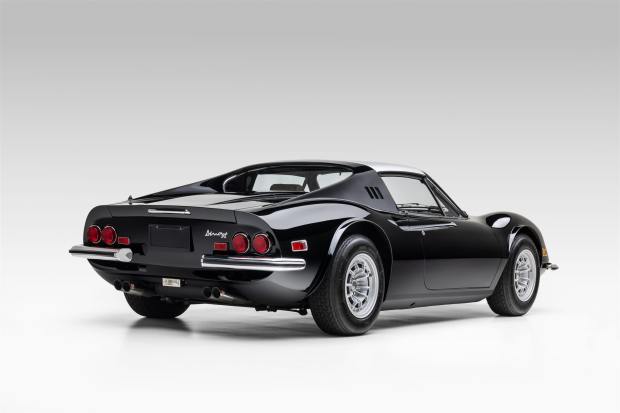
The choice of wider Campagnolo wheels accommodated by flared wheel arches was an option for the Dino and, when combined with the choice of Daytona-style seats, comprised the “chairs and flares” treatment. This example’s 7.5”-wide Campagnolo wheels and flared fenders are noted as factory equipment on reports from Matthias Bartz and Marcel Massini, both of which also note delivery with an Argento-painted roof panel.
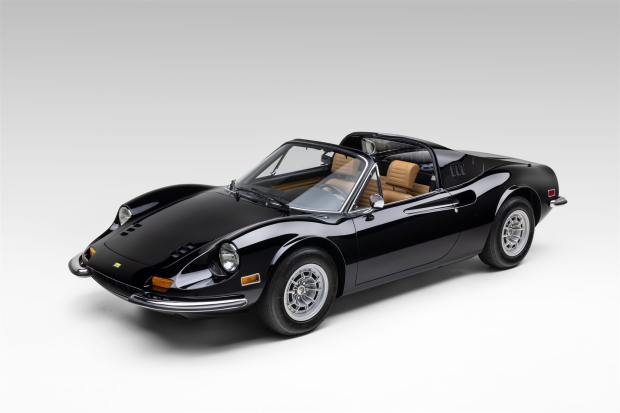
The body was refinished in its original shade of Nero (20-B-50) during the 2013 refurbishment performed by Classic Showcase in Oceanside, California. Additional work in June 2026 included removal of paint protection film and repainting of the rear panels, rocker panels, and front and rear valances. US-market lighting includes recessed rectangular front turn signals, side markers, red rear turn signal lenses, and rear reflectors inboard of the taillights.
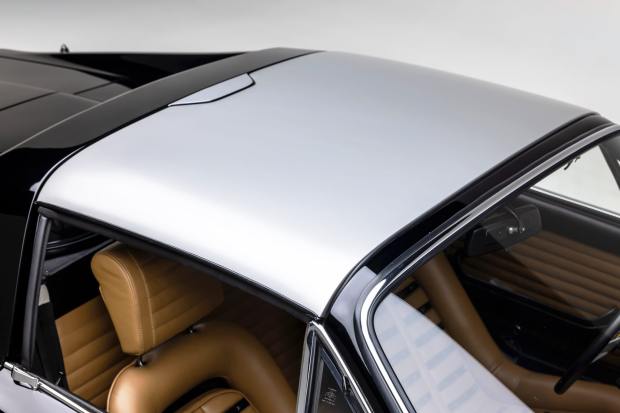
Previously refinished in matte black, the roof panel was returned to its original shade of Argento during the 2026 paintwork.
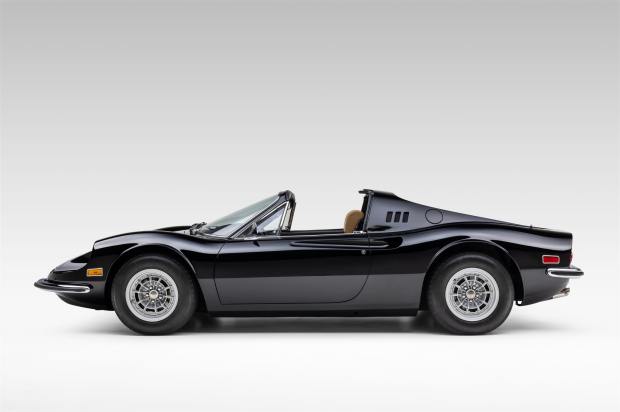
An inch wider than the standard Dino model’s Cromodora wheels, the Campagnolo alloy wheels are wrapped in 205/70VR14 Michelin XWX tires, as is a spare housed in the front compartment. Stopping is handled by servo-assisted ventilated disc brakes all around.
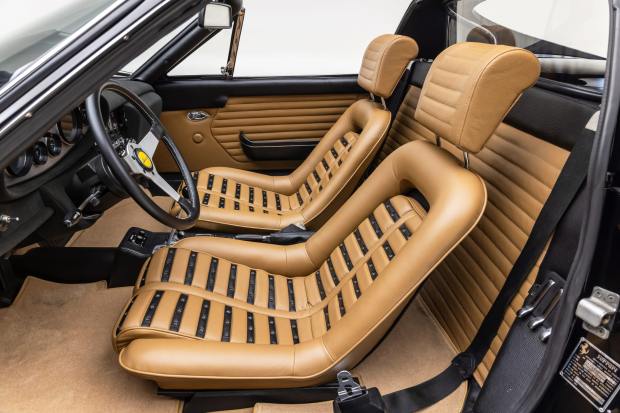
The cabin underwent a color change to red and black under previous ownership and was returned to its factory-specified combination of Tobacco (VM846) and black leather over the Daytona-style seats and door panels during an interior re-trim performed by Fast Cars of Redondo Beach, California, in March 2026. The dashboard was reupholstered in replacement black “mouse hair” trim during the 2026 project. Additional features include beige carpeting, a gated shifter, Borletti air conditioning, power windows, and a Blaupunkt push-button radio.
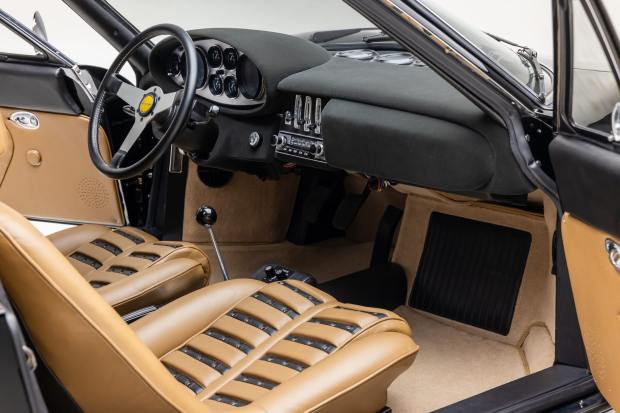
The leather-wrapped MOMO steering wheel was installed during the 2026 interior refresh and sits ahead of Veglia Borletti instrumentation, including a 170-mph speedometer, a 10k-rpm tachometer, a clock, and gauges monitoring oil temperature, coolant temperature, oil pressure, fuel level, and amperage. The five-digit odometer shows 68k miles, less than 150 of which have been added under current ownership.
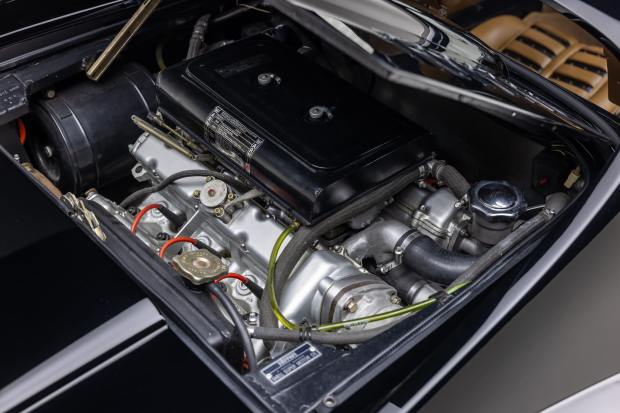
The 2.4-liter Tipo 135CS V6 features a 65° angle between cylinder banks, dual overhead camshafts per cylinder bank, and a trio of dual-barrel Weber carburetors. MSD Digital-6 Plus programmable electronic ignition has been added. The carburetors were rebuilt in 2020, while work in 2024 included replacement of the thermostat, right-side electric cooling fan, and spark plugs. Results of a compression test performed by Ferrari of Fort Lauderdale in September 2025 are viewable in the photo gallery below.
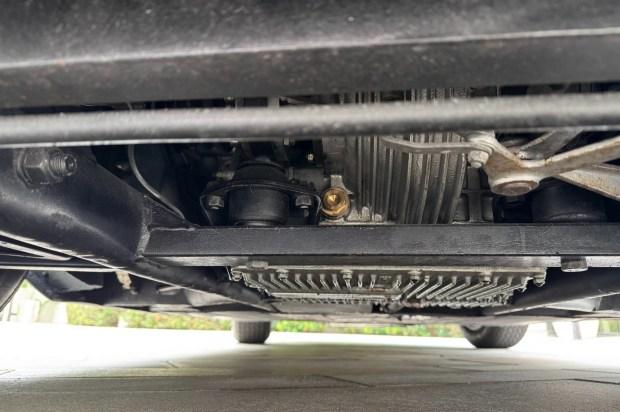
Power is sent to the rear wheels by a five-speed manual transaxle.
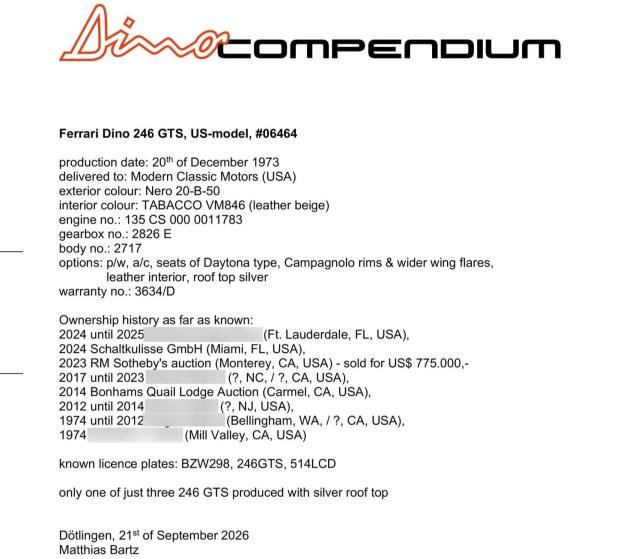
Dated September 2026, the Matthias Bartz report lists the original color combination as well as the Campagnolo wheels, flared fenders, Daytona seats, power windows, air conditioning, and Argento roof panel. The report also notes that only three examples of the 246 GTS were built with an silver roof panel. A Marcel Massini report dated 2023 is included in the sale, while screen captures of images showing markings including engine number 11783, transaxle number 2826E, and Scaglietti body number 2717 can be viewed in the gallery.
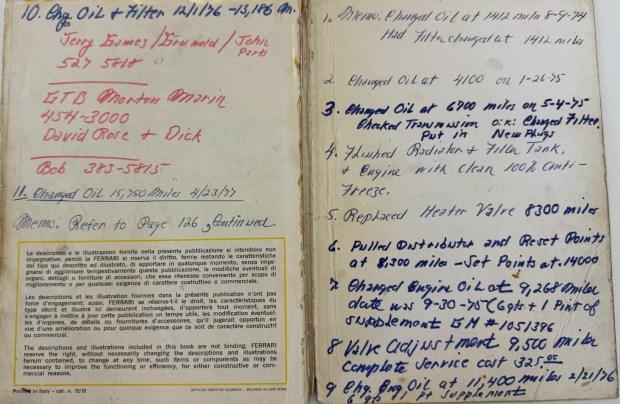
Handwritten notes dating from between 1974 and 2002 are visible on pages of an owner’s manual included in the sale. Invoices from 2020 to present are also included, as are images from the paintwork and interior work performed under current ownership.