Current Price: USD $400,000 – Source
Auction Ends: Friday, September 4 at 10:00am PT
–
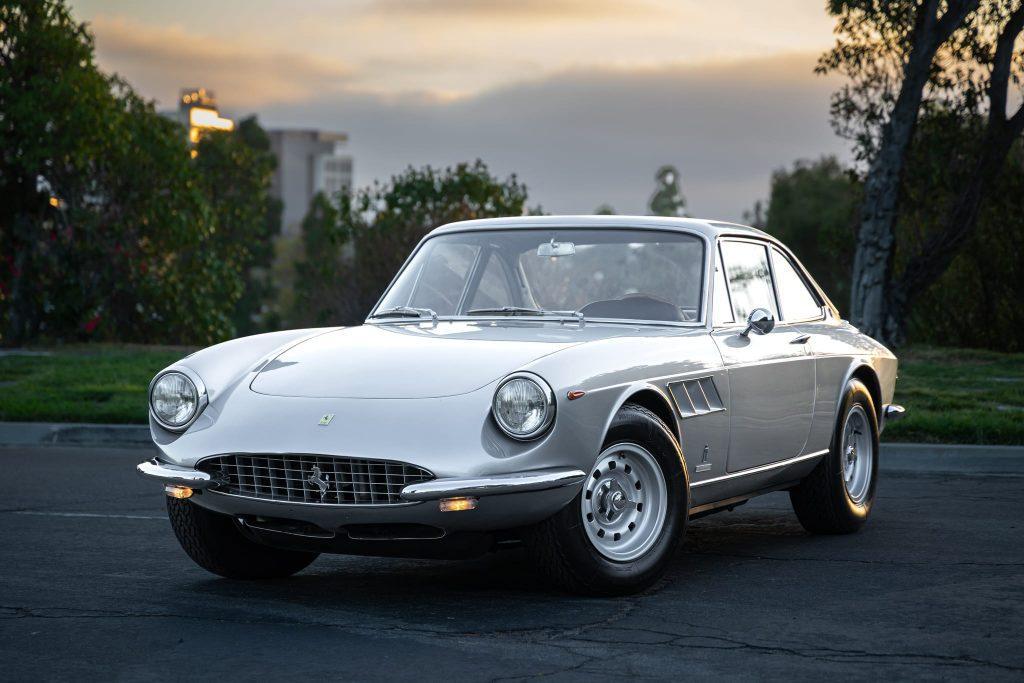
This 1968 Ferrari 330 GTC is one of 598 examples built between 1966 and 1968 and is said to have been delivered new on May 8, 1968, to Motor S.a.s. Carla Allegretti e C in Bologna, Italy, and sold to its first owner in Massa Lombarda. Chassis 11017 was later imported to the US, where it was purchased by a Washington owner in 1994. The car underwent a refurbishment between 2009 and 2013 that included a repaint in its original shade of Argento Silver, a re-trim of the black leather interior, and an overhaul and overbore of the 4.0-liter Colombo V12 along with its triple Weber carburetors. Additional features include a five-speed manual transaxle, vacuum-assisted disc brakes, four-wheel independent suspension, 14” Campagnolo center-lock alloy wheels, air conditioning, power windows, and a Becker radio. This 330 GTC was purchased by its current owner on BaT in April 2024, and subsequently received over $10k of service. It is now offered on dealer consignment in San Diego with a Marcel Massini report, invoices from the refurbishment, owner’s manuals, a tool kit, and a clean Montana title.
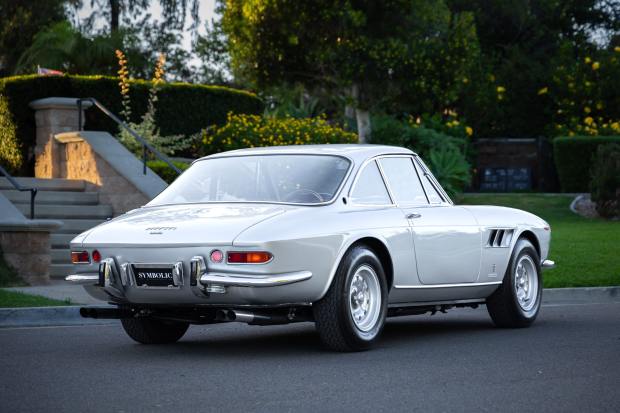
The 330 GTC was introduced at the 1966 Geneva Auto Show with Pininfarina styling combining front-end cues taken from the 500 Superfast and a rounded rear profile from the 275 GTS while sharing the 275 GTB’s 2,400mm wheelbase. Design details include split front and rear bumpers, front fender vents, circular sail-panel vents, a driver-side mirror, a fender-mounted antenna, and quad exhaust outlets.
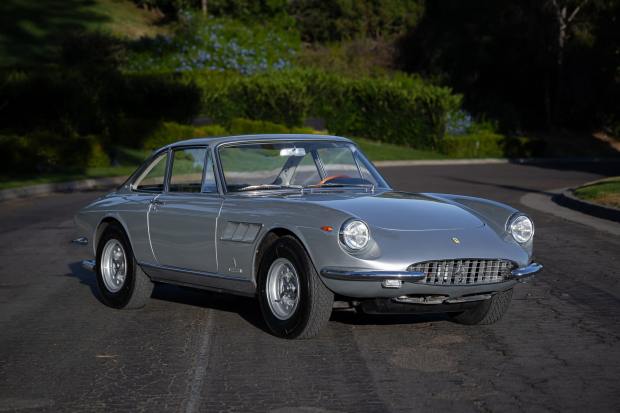
This example was refinished in its factory shade of Argento Silver during the refurbishment, which also included repairs to the fenders, rocker panels, quarter panels, door panels, and various other areas of sheet metal. The grille was repaired and polished, and the rear bumperettes were re-chromed.
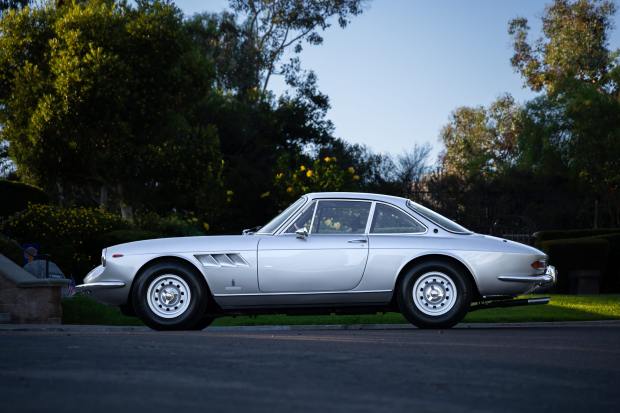
Campagnolo alloy wheels were powder-coated during the refurbishment and are secured by three-eared knock-offs, while Michelin XWX tires measuring 205VR14 are mounted at each corner. A matching spare is housed in the trunk. Stopping is handled by servo-assisted disc brakes with three-piston calipers at each corner. Work during the refurbishment included the installation of a rebuilt booster, master cylinder, and calipers, and a fluid flush was performed in March 2024.
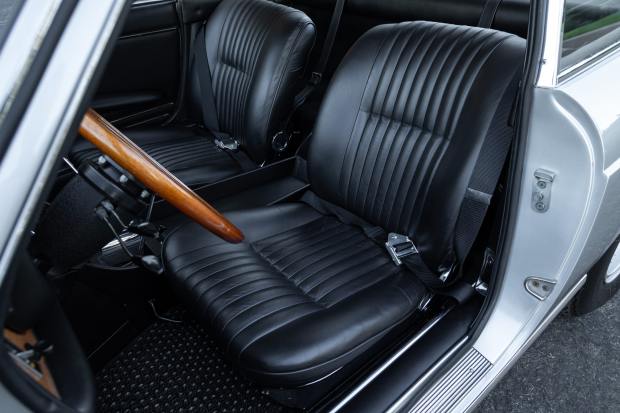
The cabin was re-trimmed during the project with black leather over seating for two and matching upholstery over the door panels, console, and dash. Additional features include color-matched carpeting, black and silver Coco Mats, a cream-color fluted headliner, wood dash trim, black shoulder belts, leather rear luggage straps, air conditioning, power windows, and a Becker Europa radio.
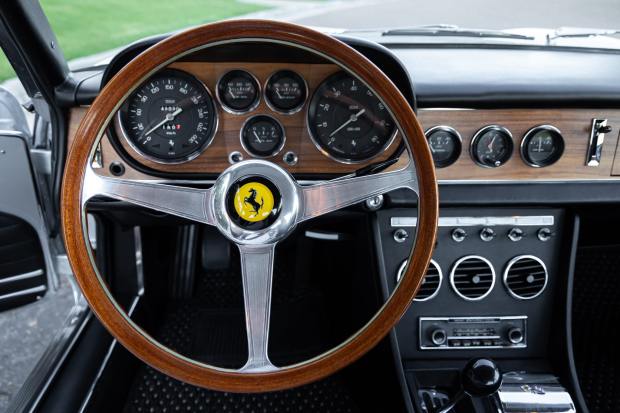
The wood-rimmed steering wheel sits ahead of Veglia Borletti instrumentation including a 300-km/h speedometer, a tachometer with a 7k-rpm redline, and gauges monitoring oil pressure, oil temperature, and coolant temperature. The five-digit odometer shows 42k kilometers (~26k miles), approximately 900 of which have been added under current ownership.
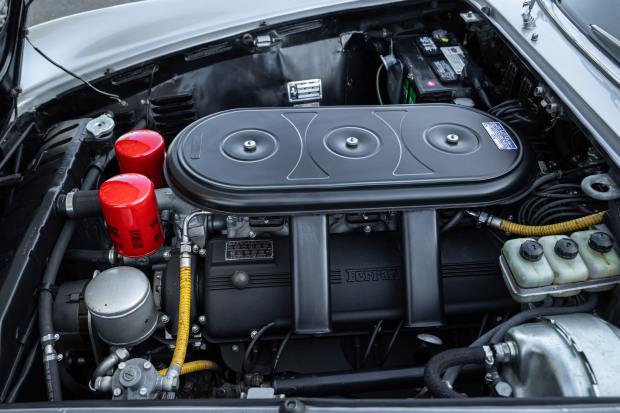
The 4.0-liter Tipo 209 V12 was overhauled in 2009 with work including line boring of the block and the installation of .020”-over pistons. The cylinder heads were resurfaced and the crankshaft was polished, while the bearings, valves, and timing chain were replaced. The carburetors, distributors, water pump, mechanical fuel pump, and starter were rebuilt. Service in 2024 included adjustment of the carburetors and replacement of the spark plugs, points, and condenser. Work in May 2024 by Scuderia Rampante of Erie, Colorado, included replacing the heater hoses and radiator cap. The associated invoice notes notes leaks from the chain tensioner, cam seal, and head gaskets, as well as some items that were not completed at that time. The selling dealer has provided a detailed explanation of the unresolved services, and both documents are shown in the gallery.
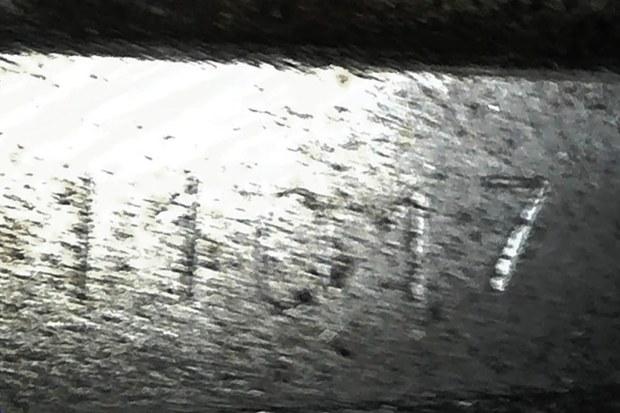
Engine number 11017 is shown stamped on the block above, matching the chassis number.
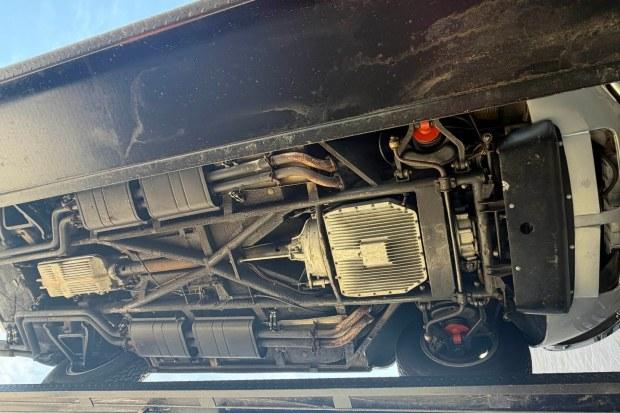
Power is transferred to the rear wheels via a torque tube and a rear-mounted five-speed manual transaxle, which was resealed during the refurbishment. The clutch and clutch cylinders were replaced, the flywheel was resurfaced, and replacement half shafts were rebuilt and installed. A suspension rebuild included replacement of the ball joints and bushings and the installation of rebuilt rear Koni shock absorbers. The axles were rebuilt and the boots replaced in May 2024.