Current Price: USD $375,000 – Source
Auction Ends: Tuesday, September 29 at 10:11am PT
–
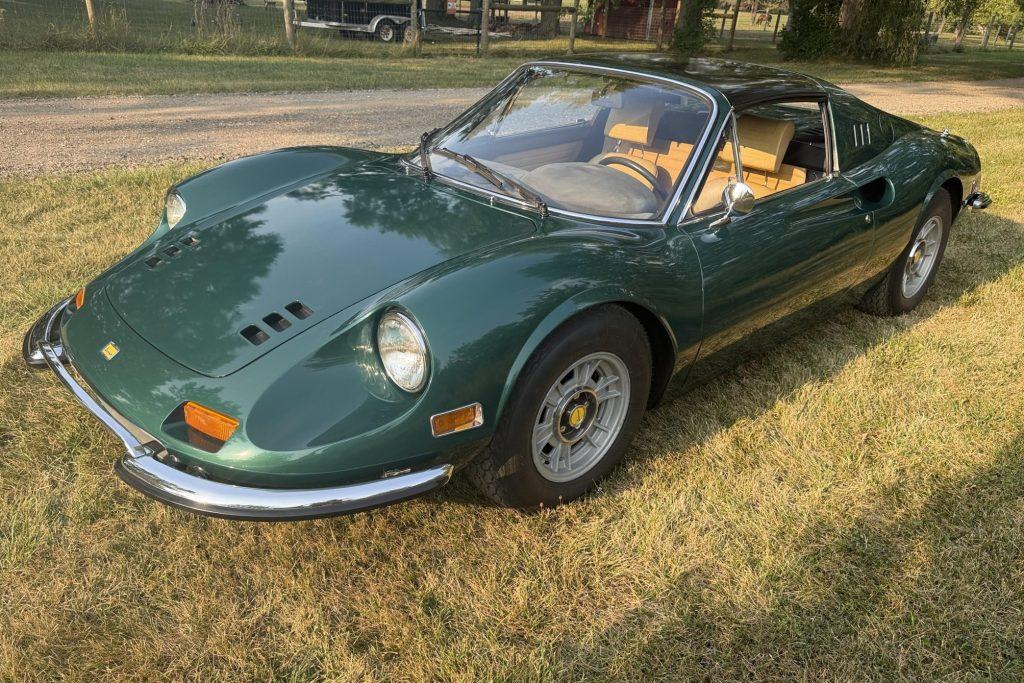
This 1974 Ferrari Dino 246 GTS is one of approximately 2,900 E-series examples produced through July 1974, and it was delivered to Chinetti Garthwaite Import in the US and sold new to the owner’s spouse through Knaus Motors in Lake Forest, Illinois. The car is finished in Verde Pino Metallizzato over beige leather, and power is provided by a 2.4-liter V6 equipped with triple Weber carburetors and mated to a five-speed manual transaxle. Equipment includes a removable roof panel, four-wheel ventilated disc brakes, 14″ Cromodora five-lug alloy wheels, Daytona-style seats, power windows, and an AM/FM radio. Work in preparation for the sale is said to have involved servicing the fuel system and replacing the tires, battery, and Targa top seals. This E-series 246 is now offered by the seller on behalf of the current owner with a tool kit, a Dino Compendium report, and a clean Michigan title in the owner’s name.
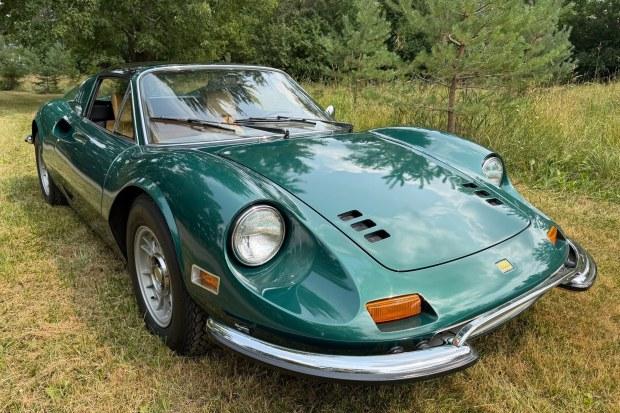
With bodywork designed by Aldo Brovarone and Leonardo Fioravanti at Pininfarina, the prototype 206 GT first appeared at the 1965 Paris Auto Salon and was followed by revised concepts at the 1966 and 1967 Turin Motor Shows. The 2.0L-powered 206 entered production in early 1968 and was later superseded by the 2.4L-powered 246, which was offered in GT coupe and GTS targa-top variants beginning in 1969 and 1971, respectively. Paint chips are noted on the doors.
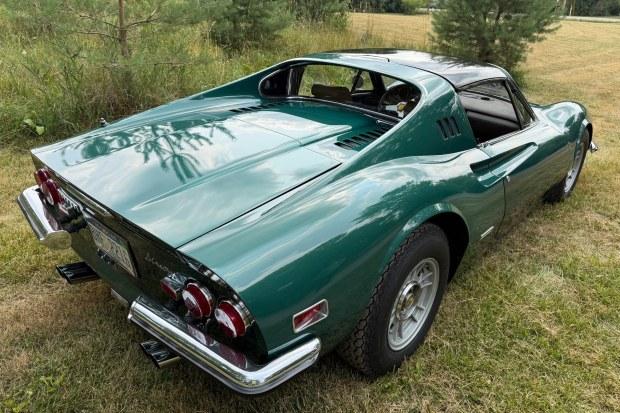
The Scaglietti-built bodywork on this example is finished in Verde Pino Metallizzato and was repainted some time ago. Additional exterior features include a removable roof panel, a driver-side mirror, chrome bumpers, and a power antenna. US-market lighting includes recessed rectangular front turn signals, side markers, and rear reflectors inboard of the taillights. The Targa top seals were replaced in preparation for the sale. The seller notes scuffs on the lower valance and a ding on the right door.
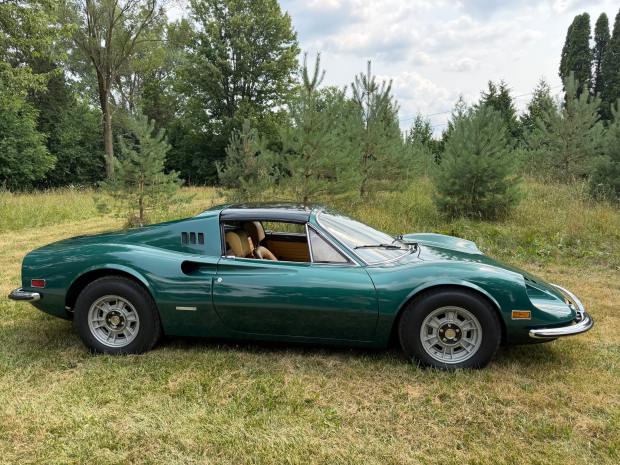
The 14″ Cromodora five-lug alloy wheels wear Dino-branded center caps and were mounted with 205/70 Michelin XWX tires in preparation for the sale. A matching spare wheel is stored in the front trunk. The suspension incorporates unequal-length A-arms, coilover shock absorbers, and anti-roll bars at front and rear. Stopping power is provided by power-assisted ventilated disc brakes all around, and the system was reportedly overhauled in 2020. Wheel centers were replaced in July 2026.
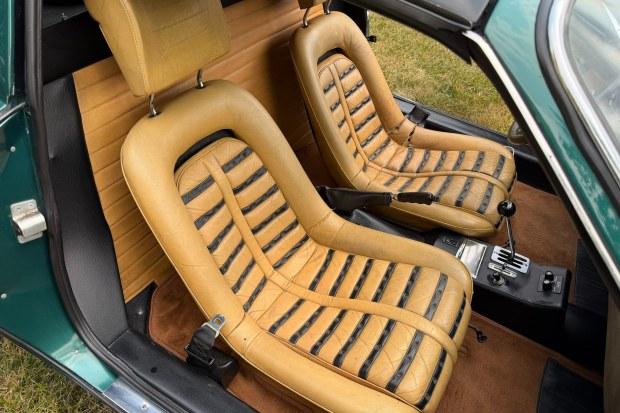
The cabin houses Daytona-style seats trimmed in beige leather with black strips along with color-matched upholstery over the door panels and rear bulkhead. Additional features include gray “mouse-fur” dash trim, power windows, an AM/FM radio, a heater, and headrests mounted to the seatbacks. The seller notes seam separation on the seats along with glue residue on top of the dash from a prior radar detector mount.
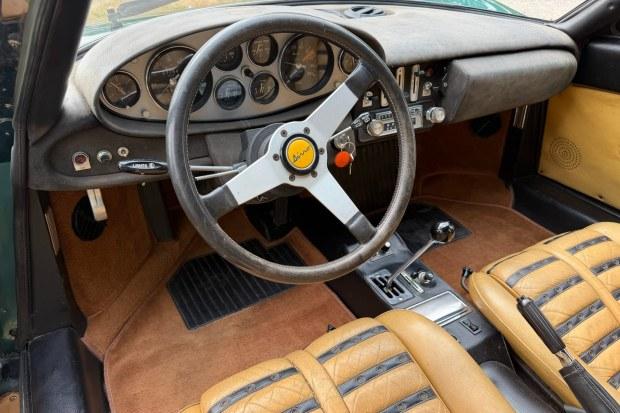
The leather-trimmed MOMO steering wheel features a Dino horn button and is paired with a dogleg-pattern gated shifter. Dino-branded Veglia Borletti instrumentation consists of a 170-mph speedometer, a tachometer with a 7,750-rpm redline, an analog clock, and auxiliary gauges for oil temperature, coolant temperature, oil pressure, fuel level, and amperage. The five-digit odometer shows 28k miles.
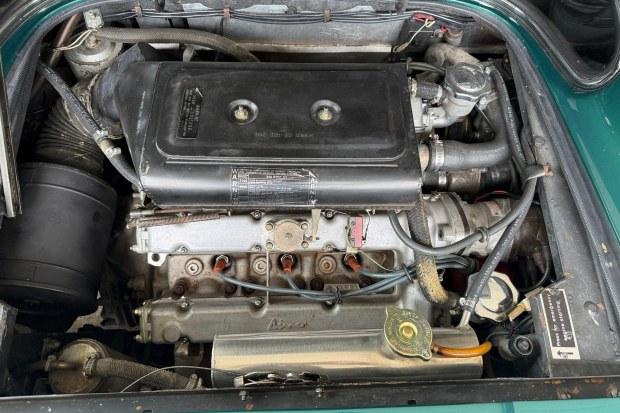
The mid-mounted 2.4-liter Tipo 135CS V6 features a 65° angle between cylinder banks, dual overhead camshafts on each bank, Magneti Marelli ignition, and a trio of two-barrel Weber carburetors. Work in preparation for the sale involved servicing the fuel system, changing the oil, and replacing fuel linkages and the battery. Engine stamping 135CS0000011925 is viewable in the gallery, and a corresponding number is listed on the Dino Compendium report.
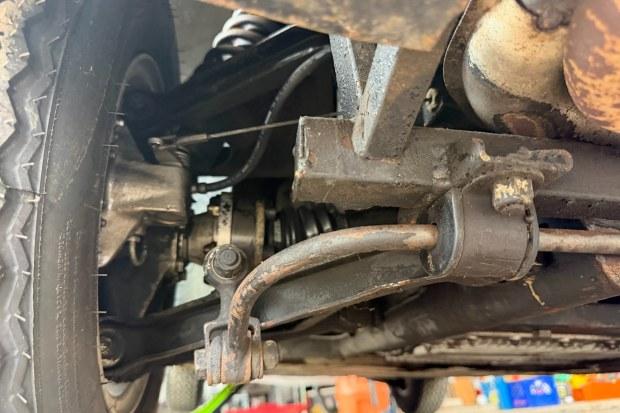
Power is sent to the rear wheels via a five-speed manual transaxle.
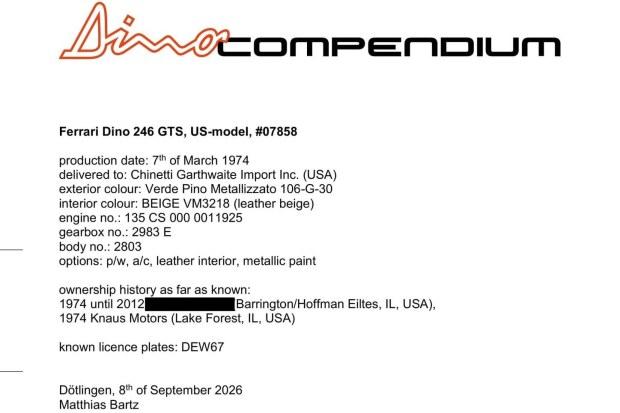
The Matthias Bartz Dino Compendium report is viewable above and lists factory colors, serial numbers, and ownership history as well as a production date of March 7, 1974.