Current Price: USD $95,500 – Source
Auction Ends: Monday, June 22 at 1:01pm PT
–
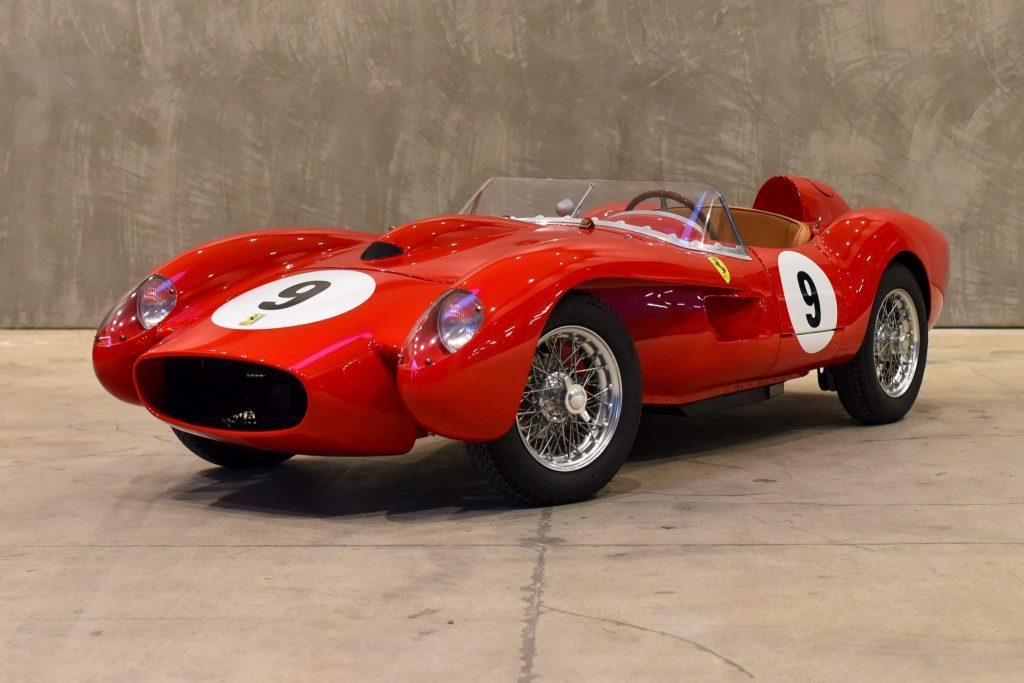
This ¾-scale re-creation of a Ferrari 250 Testa Rossa was hand-built by the Little Car Company of Bicester, England, in 2022 under license from Ferrari. The hand-formed aluminum bodywork replicates a Scaglietti-designed pontoon-fender example, of which 19 were produced, and was reportedly created using drawings held by Ferrari Classiche as references. This is the 32nd example of a planned 299 units. The body is finished in Rosso Corsa with black-and-white #9 roundels to match David Love’s 250TR. Additional details include a black tubular steel frame and a 12 kW electric motor with forward and reverse operation, as well as 12″ chrome Borrani wire wheels, enclosed headlights, taillights, leather hood and trunk straps, a windscreen with an aluminum frame, a wood-rimmed Nardi-style three-spoke steering wheel, a four-mode drive selector, and a tan leather bench seat. This Ferrari Testa Rossa J was displayed inside a house and is now offered at no reserve on a bill of sale in Carlsbad, California.
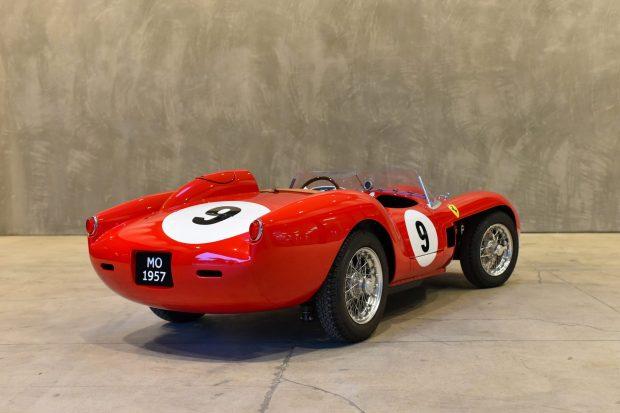
Ferrari began development of the 250 Testa Rossa, or “red head,” as a successor to the 500 TRC in anticipation of lower displacement limits that would soon be imposed by the Commissione Sportiva Internazionale. After a single prototype was built with enveloped bodywork, revised Scaglietti bodywork was introduced featuring a cutaway nose and nacelle-style fenders contoured to channel airflow to the brakes. The Testa Rossa claimed overall victories at the 24 Hours of Le Mans, 12 Hours of Sebring, 1000 km Buenos Aires, and the 3 Hours of Auvergne.
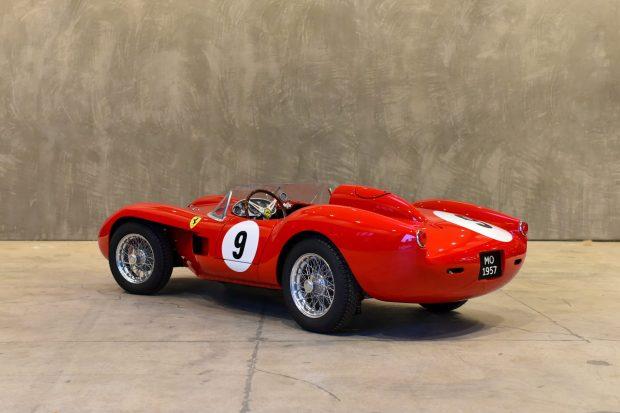
Features include faux air intakes, headlights with enclosed covers, taillights, leather-and-chrome hood and trunk straps along with matching latches, a driver-side headrest fairing with an access door for the charging port, a plexiglass windscreen with an aluminum frame, a rear “MO 1957” license plate, painted Scuderia Ferrari fender shields beneath the clear coat, and a Ferrari prancing horse emblem recessed into the nose panel.

Chrome-polished 12″ Borrani wire wheels with branded spinners are mounted with Pirelli Cinturato CN54 tires. Solid-disc brakes are fitted at each corner.
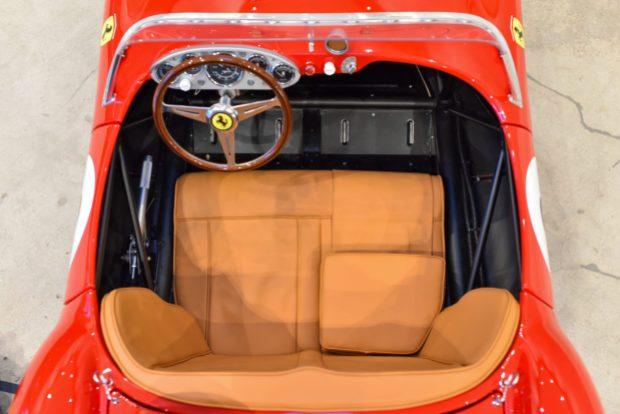
The cockpit is fitted with a tan leather bench seat, a booster cushion, and a handbrake positioned on the left side. The drilled aluminum foot pedals were reportedly sourced from Ferrari.
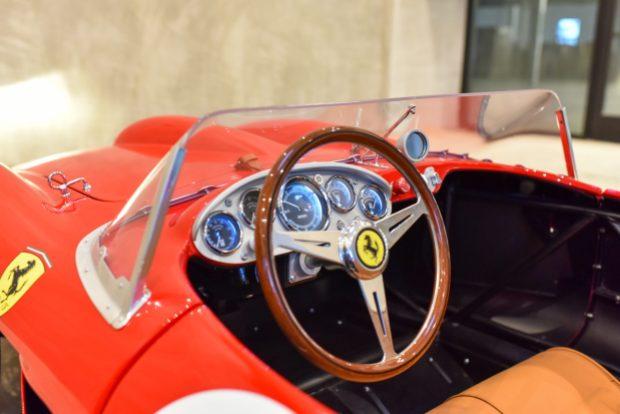
The Nardi-style wood-rimmed steering wheel features a black-and-yellow prancing horse center hub ahead of an aluminum panel with Ferrari-branded instrumentation, including a centrally mounted kph speedometer with a digital display and switches to operate the lights and horn. The odometer shows 15 kilometers (~9 miles). The painted dashboard features rotary switches for forward and reverse, along with a drive mode selector offering Novice, Comfort, Sport, and Race. The fuse that limits the car to 19 mph has been removed, though it is included. When unrestricted, the car has a top speed of 80 km/h (~50 mph) in Race mode.
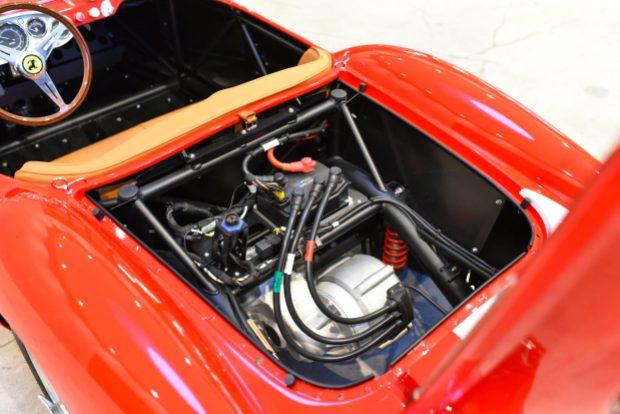
Lifting the front-hinged hood reveals batteries that the seller states were manufactured in the Netherlands. Manufacturer’s plaques are riveted to the car under the hood. The motor is accessed beneath the rear bodywork panel.

A cover, a charger, and a presentation box are included.

