Current Price: USD $5,200,000 – Source
Auction Ends: Tuesday, July 7 at 10:00am PT
–
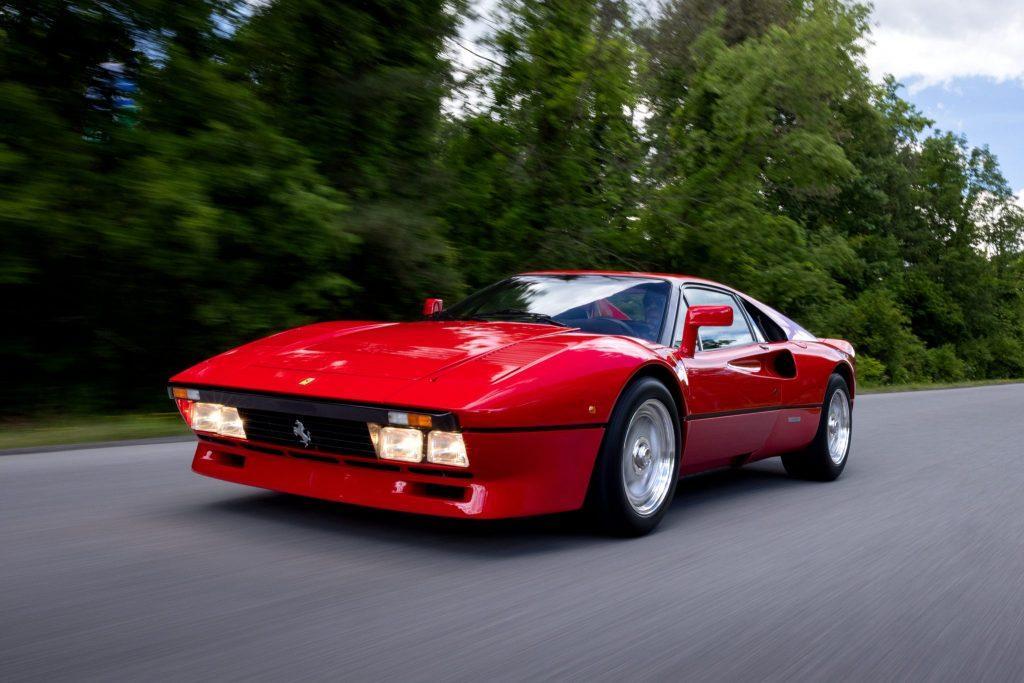
This 1985 Ferrari 288 GTO is one of the initial 200 examples constructed en route to achieving the model’s homologation status in FIA Group B competition and is among a total of 272 examples built between 1984 and 1986. Chassis 54225 was completed in December 1984 and invoiced through German dealer Autoexpo Filderstadt before being delivered in the US to North American Ferrari racing pioneer Giuseppe Risi’s dealership Ferrari of Houston in Texas. According to the car’s Marcel Massini report, it was sold in June 1985 to Mexico-based collector and privateer Sam Bardor, who had it refinished from its original Rosso Corsa to silver before driving it on Mexican registration in Ferrari Club regional meetings in Florida and Mexico. The car was sold in early 1988 and was returned to its factory shade before again changing hands in January 1989. It then remained under the care of a Washington owner for three years before spending time in the Netherlands and Germany in the early 1990s. In 1993 it was reportedly confiscated by authorities in the Netherlands amid accusations of criminal activity by its then-owner and remained impounded through the end of the decade before being returned to the US and sold in 2001 to a Louisiana owner who displayed it at the Concourso Italiano and Cavallino Classic during a nine-year stewardship. It was re-purchased in 2010 by Risi, who commissioned a refurbishment by Ferrari in Maranello, Italy, that culminated in the completion of Ferrari Classiche certification in 2011. After spending two years with a Houston owner, the car was sold in 2015 to a Ferrari racing driver and Saudi royal family member who retained it in his Los Angeles collection for six years. It then resided in an Austin, Texas, collection between 2021 and 2025 before being purchased by the selling dealer in 2026. Featuring composite and Kevlar bodywork, the car is powered by a mid-mounted 2,855cc quad-cam V8 that incorporates twin IHI turbochargers, air-to-air intercoolers, dry-sump lubrication, and Weber-Marelli fuel injection. Additional equipment includes a five-speed manual transaxle with a magnesium alloy case, power-assisted ventilated disc brakes with aluminum calipers, staggered-width 16” Speedline multipiece wheels, black leather upholstery over Daytona-style seats with Kevlar frames, air conditioning, and power windows. This Tipo F114 is now offered in North Salem, New York, with a Ferrari Classiche Red Book, a Marcel Massini report, copies of documentation from 1988, invoices from the last decade, a tool kit, owner’s manuals, and a Florida title.
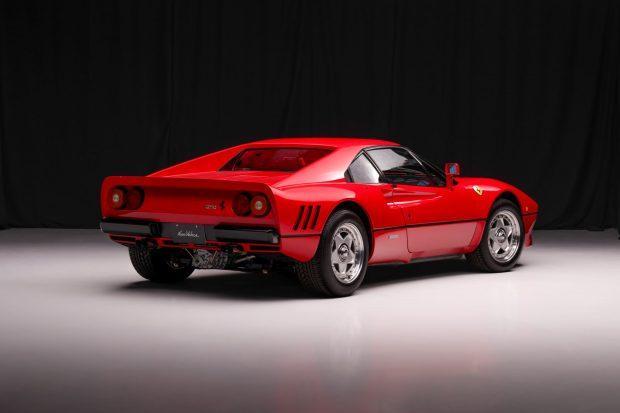
Ferrari’s development of a turbocharged competition-oriented offshoot of the 308 began in the early 1980s and was channeled into the design of a homologation model for the newly launched FIA Group B category. With mechanical underpinnings designed by Nicola Materazzi and styling by Pininfarina’s Leonardo Fioravanti, the Gran Turismo Omologato was announced in September 1983 and unveiled at the 1984 Geneva Motor Show. Homologation was awarded in June 1985 after the first 200 examples of the 288 GTO were constructed, but the demise of Group B in 1986 upended any competition opportunity for the model’s Evoluzione variant, which was instead parlayed into the development of Ferrari’s next road-going supercar, the F40.
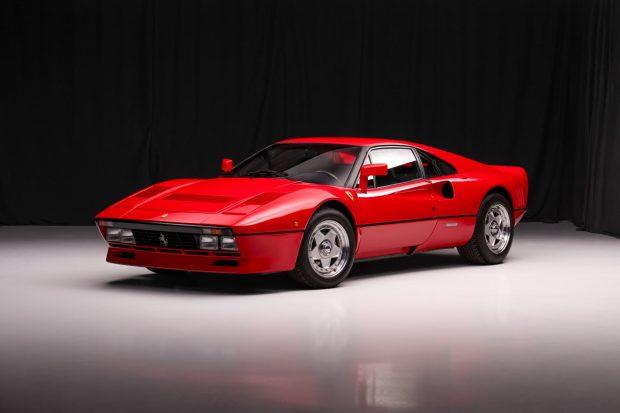
The 288 GTO model was underpinned by a 2,450mm-wheelbase tubular steel chassis with an integrated roll hoop, front and rear subframes, composite reinforcement, a Kevlar-covered aluminum honeycomb rear firewall, and fiberglass floor panels. Each car was finished in Rosso Corsa (300/6) over Kevlar, Nomex, and fiberglass composite body panels.
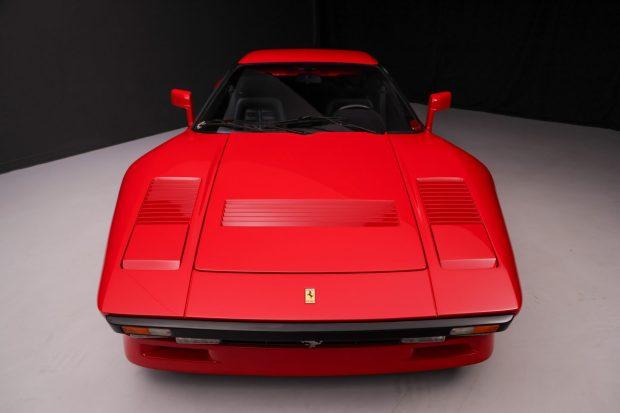
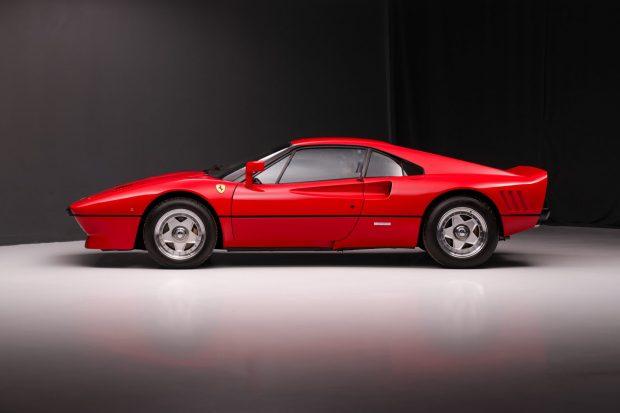
Styling incorporating flared fenders, a front spoiler with brake cooling inlets and five horizontal vents, quadruple grille-mounted driving lights, pop-up headlights, louvered aluminum nose insets, stalk-mounted side mirrors in body-color housings, a rear spoiler, a rear-hinged louvered engine cover, and Ferrari 250 GTO-inspired triple angled vents behind each rear wheel. This example received a cosmetic refurbishment in 2010 by Ferrari in Maranello.
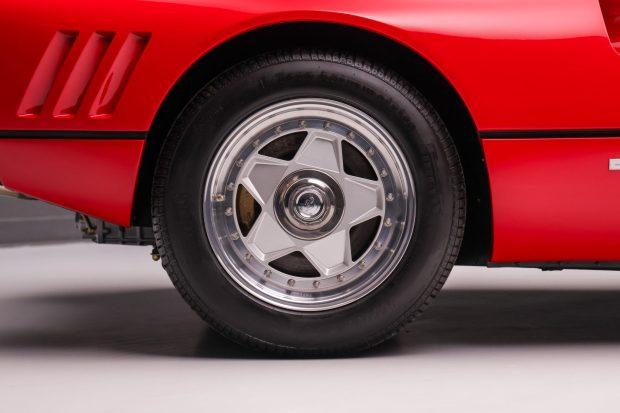
Speedline multipiece wheels measuring 8×16” up front and 10×16” at the rear are said to have been refurbished in January 2026 and are secured by octagonal nuts that were re-chromed in 2025. Pirelli P Zero Asimmetrico tires measuring 225/50 up front and 255/50 at the rear were mounted in 2021. A space-saver spare wrapped in Goodyear rubber is housed in the front compartment and was factory equipment for the 288 GTO model.
Stopping is handled by power-assisted disc brakes with gold-color aluminum calipers acting on ventilated rotors measuring 306mm in diameter up front and 310mm in diameter at the rear. The steering rack was replaced during a 2021 service by Ferrari Beverly Hills.
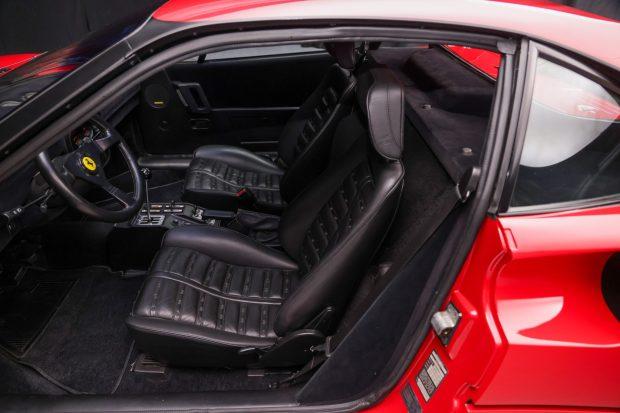
The cabin is upholstered in Pelle Nera (8500) over Kevlar-frame seats trimmed in optional Daytona-style black leather that was reconditioned and re-dyed during a January 2026 service by GT Motor Cars in West Palm Beach, Florida, which also included replacement of the color-matched leather trim over the lower door panels. “Mouse-fur”-style trim covers the dashboard, upper door panels, and rear shelf.
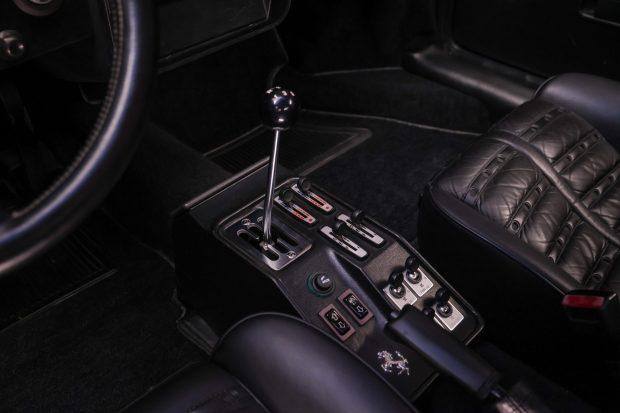
Additional features include color-matched carpeting, a perforated cream-color headliner, a gated shifter, air conditioning, and power windows, the latter two of which were both optional equipment for the 288 GTO.
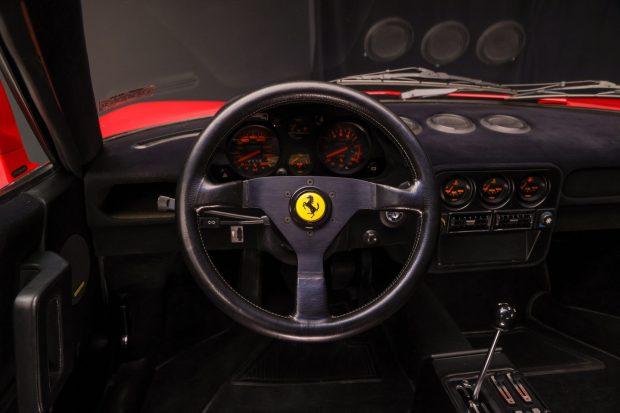
The three-spoke steering wheel sits ahead of orange-letter Veglia Borletti instrumentation including a 10k-rpm tachometer, a 320-km/h speedometer, and gauges monitoring oil pressure and boost. The five-digit odometer shows 23k kilometers (~14k miles), approximately 100 of which have been added under current ownership. A trio of gauges to the driver’s right monitors coolant temperature, oil temperature, and fuel level.
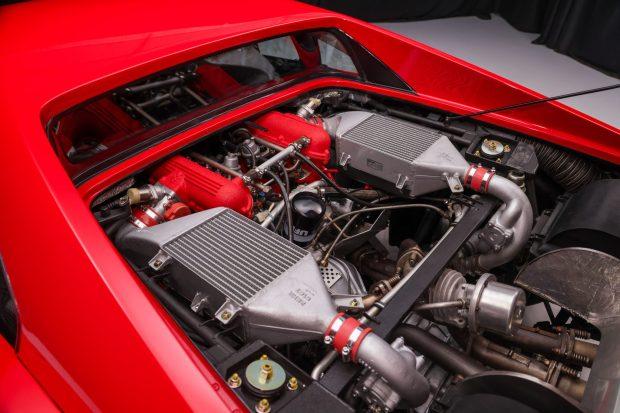
Designed by Nicola Materazzi, the 288 GTO’s 2,855cc Tipo F114B V8 was a smaller-bore, turbocharged derivation of the 308 Quattrovalvole engine and was mounted longitudinally in a lower and more-forward position than the 308’s transverse-oriented powerplant. Features include twin IHI turbochargers, twin Behr air-to-air intercoolers, dry-sump lubrication, a forged-steel crankshaft, Nikasil cylinder liners, a magnesium alloy sump, belt-driven dual overhead camshafts with four valves per cylinder, and fuel injection with Weber-Marelli electronic management.
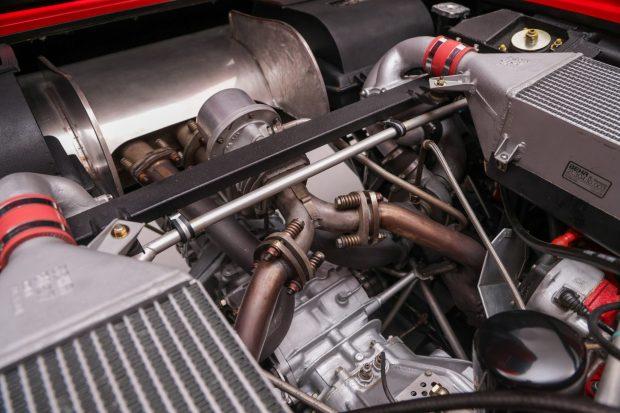
The engine is said to have been overhauled by Ferrari during the 2010 refurbishment in Maranello, and the overhaul has reportedly been confirmed by Giuseppe Risi. A cosmetic refurbishment of the engine bay by GT Motor Cars in Spring 2026 is said to have included replating or refinishing of the associated hardware. Service by Ferrari of Naples in Florida in April 2026 included fluid and filter changes as well as replacement of the timing belts, accessory belts, and fuel pressure regulators.
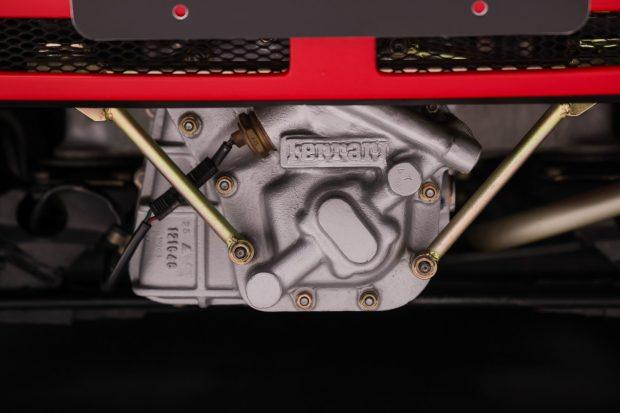
The five-speed manual transaxle features a magnesium alloy case with a removable rear differential cover and is mounted behind the engine. Service performed by the selling dealer in June 2026 is said to have included replacement of the throw-out bearing seals and clutch housing seals as well as bleeding of the clutch fluid. Four-wheel independent suspension incorporates double wishbones with Koni coilover shock absorbers and anti-roll bars at front and rear.
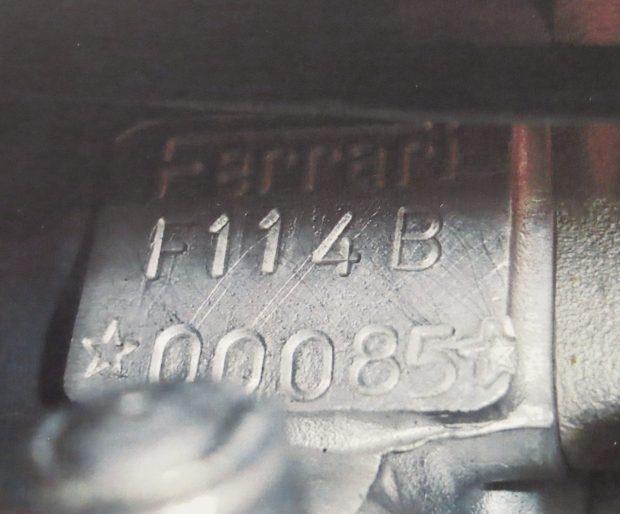
Engine number 00085 is shown stamped on the block above, and the number 82 can be seen stamped on the gearbox and differential housings in the photo gallery below, which also includes images of date-code markings on each wheel.
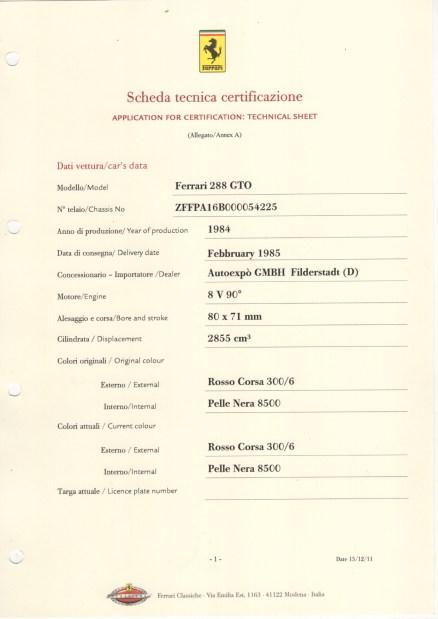
The Ferrari Classiche scheda tecnica certificazione lists the original colors and delivery date, and additional pages of the Ferrari Classiche Red Book issued in 2011 can be viewed in the gallery. The report also includes images of engine, gearbox, and differential stamps, all of which the report states are consistent with original components. An October 2025 letter from the general manager of Ferrari of Austin confirms an inspection of the car with affirmation of stamps matching those listed in the Red Book.
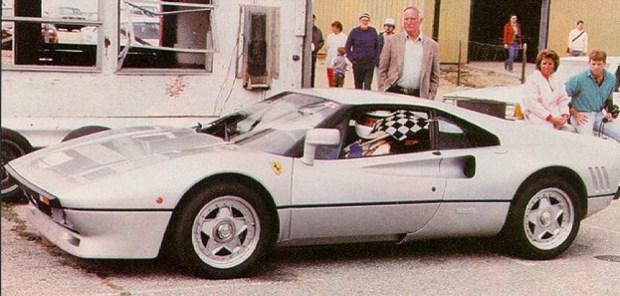
Photos provided by Marcel Massini show the car finished in silver under Sam Bardor’s ownership. According to the Marcel Massini report, this car became the first 288 GTO finished in a color other than Rosso Corsa when it was painted silver under the ownership of Bardor, who reportedly had eight Ferraris finished in the same color to satisfy his superstition. The Massini report can be viewed in the gallery and outlines the car’s history between its construction and 2015. Also viewable in the gallery is a copy of a 1988 invoice from Ferrari to Giuseppe Risi in care of Symbol Cars doing business as Ferrari of Houston, along with copies of 1988 and 2001 documents from the EPA and NHTSA.
The Carfax report is free of accidents or other issues. In 2005, the car was registered in a county declared a flood disaster area by the Federal Emergency Management Agency.